SEWER BACKUP CLEANUP • BELLEVILLE, ILLINOIS
Emergency Sewer Backup Cleanup in Belleville, IL
When the floor drain becomes a fountain, you need it handled today. We provide sewer backup cleanup in Belleville, IL for basements, cellars, lower-level bathrooms and laundry areas: removing sewage and water, hauling out contaminated materials, disinfecting and drying. Call now and a crew is dispatched immediately, in protective gear and ready to work.
Why do floor drains back up in Belleville's older neighborhoods during heavy storms?
Because aging sewers take in more stormwater than they can carry. When the main runs full, flow reverses up private laterals and exits at the lowest opening, usually a basement floor drain.
In the older parts of town, the pipe from the house to the street is often clay tile laid in short sections. The joints let in tree roots and groundwater, and a partly blocked lateral backs up far sooner than a clear one.

Stop, before you do anything else
Do not run water anywhere in the house. No flushing, no laundry, no dishwasher.
Keep children and pets upstairs with the basement door closed.
Do not wade in. Sewage carries bacteria, viruses and parasites.
Turn off the furnace blower if the return air is in the basement.
Do not touch the electrical panel if you have to stand in water to reach it.
Take photos from the stairs for your insurer.
Two different backups, two different fixes
Backup only during storms
The public sewer is overloading. Your lateral may be fine. The long-term fix is a backwater valve or an overhead sewer conversion, which a plumber installs. Report the event to the City of Belleville sewer department so it is on record.
Backup when you use water
If the drain comes up when the washer empties or a toilet flushes, the blockage is in your own lateral: roots, a collapse or a clog. A plumber needs to camera and clear the line.
In both cases the cleanup inside the house is the same, and it should not wait for the plumbing repair.
What we remove and what we save
Sewage is Category 3 water. Anything porous that it touched is removed: carpet, pad, paneling, drywall, insulation, cardboard, upholstered furniture, mattresses and stuffed items. Solid wood furniture, metal, glass and hard plastic can usually be cleaned and disinfected. Concrete, brick, stone and framing are scrubbed, disinfected and dried in place.
In old cellars, the brick and stone walls absorb some contaminated water. They are pressure-rinsed where practical, scrubbed with detergent, disinfected, and then dried slowly.
Our cleanup process
Set up
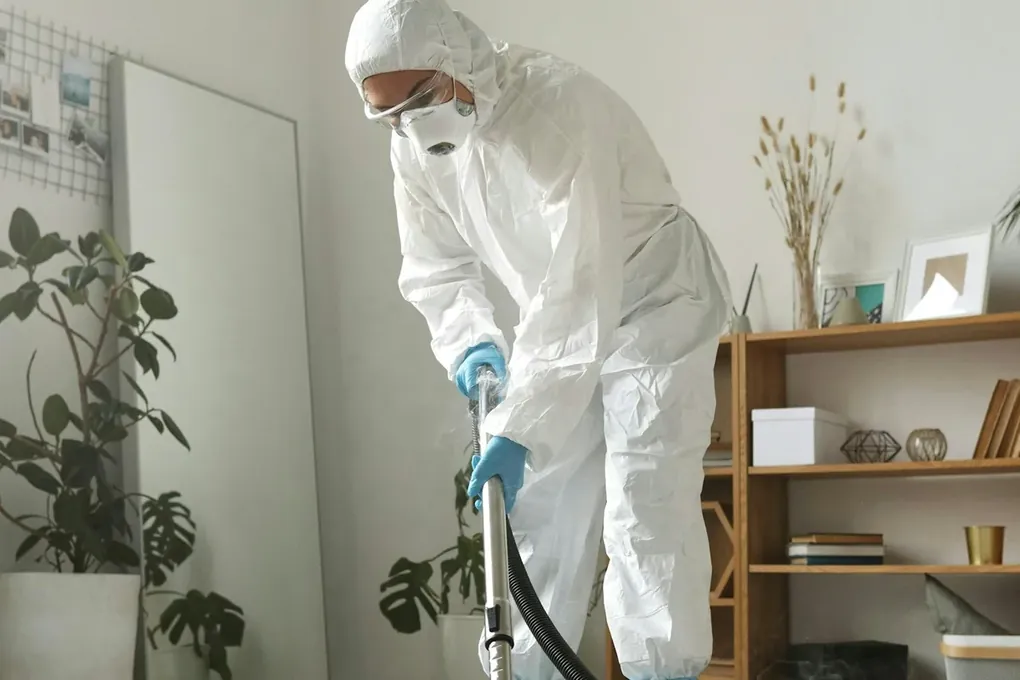
Protective suits, gloves and respirators go on. A clean path is laid from the basement to the exit so nothing is tracked through the house.
Pump and extract
Sewage and water are pumped out and solids removed. Discharge goes to an appropriate sanitary point, not onto the lawn.
Tear out
Contaminated porous materials are cut out, bagged and removed.
Wash, then disinfect
Surfaces are cleaned with detergent to remove soil, then treated with a disinfectant rated for sewage. Doing these as two steps is what makes the disinfectant effective.
Dry and filter the air
Dehumidifiers and air movers dry the space. HEPA air scrubbers run throughout.
Repair
Finished areas are rebuilt after drying.
Appliances and mechanical equipment
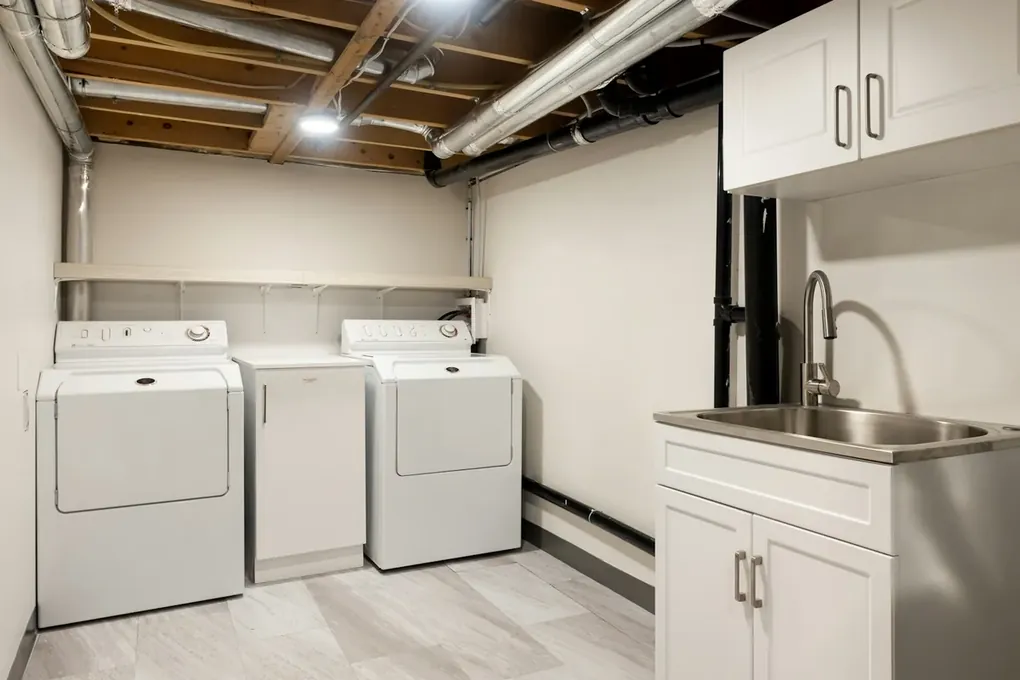
Furnaces, water heaters, washers and dryers often sit on the basement floor. If sewage reached burners, motors or controls, have an HVAC technician or appliance service check them before use. Insulation inside a water heater jacket or furnace cabinet that got wet with sewage cannot be cleaned.
Preventing the next one
A backwater valve on the lateral closes when flow reverses. An overhead sewer raises the home's drain line above the level of the street sewer and pumps basement fixtures up to it. A standpipe or plug in the floor drain is a stopgap, not a fix. A plumber can tell you which suits your house, and it is worth doing before the next heavy storm season.
Insurance and cost
Sewage backup cleanup in Belleville, IL is generally covered only when the policy carries a sewer and drain backup endorsement. Check your declarations page. Cost depends on the area and how much was finished or stored there. An unfinished cellar is typically in the high hundreds to a few thousand dollars. A finished basement is commonly several thousand or more with repairs. How we document these losses is described on our Water Damage Insurance Claim page.
Related pages
For clean-water or rain seepage, see Basement Flood Cleanup. For a single overflowing fixture, see Toilet Overflow Cleanup.
Sewer backup questions
Is a sewer backup in basement areas dangerous if it has already drained away?
Yes. The residue left on floors and walls is still contaminated and needs cleaning and disinfection.
Why is my floor drain backing up only when it rains?
The public sewer is surcharging during storms. A backwater valve is the usual protection.
How long does raw sewage cleanup take?
Removal and disinfection usually take a day. Drying takes several more, longer in brick and stone cellars.
Will the smell go away?
Yes, once contaminated materials are removed and the structure is cleaned and dried. Lingering odor means something was missed.
Who pays, me or the city?
The homeowner is generally responsible for the lateral and for damage inside the home. Your insurer and the city can tell you how a specific event is handled.
Sewage in the basement?
Call (618) 330-9060 for sewer backup cleanup in Belleville, IL. The crew is dispatched immediately for sewage backup cleanup in Belleville, IL and sewage removal in Belleville, IL. Prompt sewage removal in Belleville, IL keeps the contamination out of the rest of the house.