BASEMENT FLOOD CLEANUP • BELLEVILLE, ILLINOIS
Urgent Basement Flood Cleanup in Belleville, IL
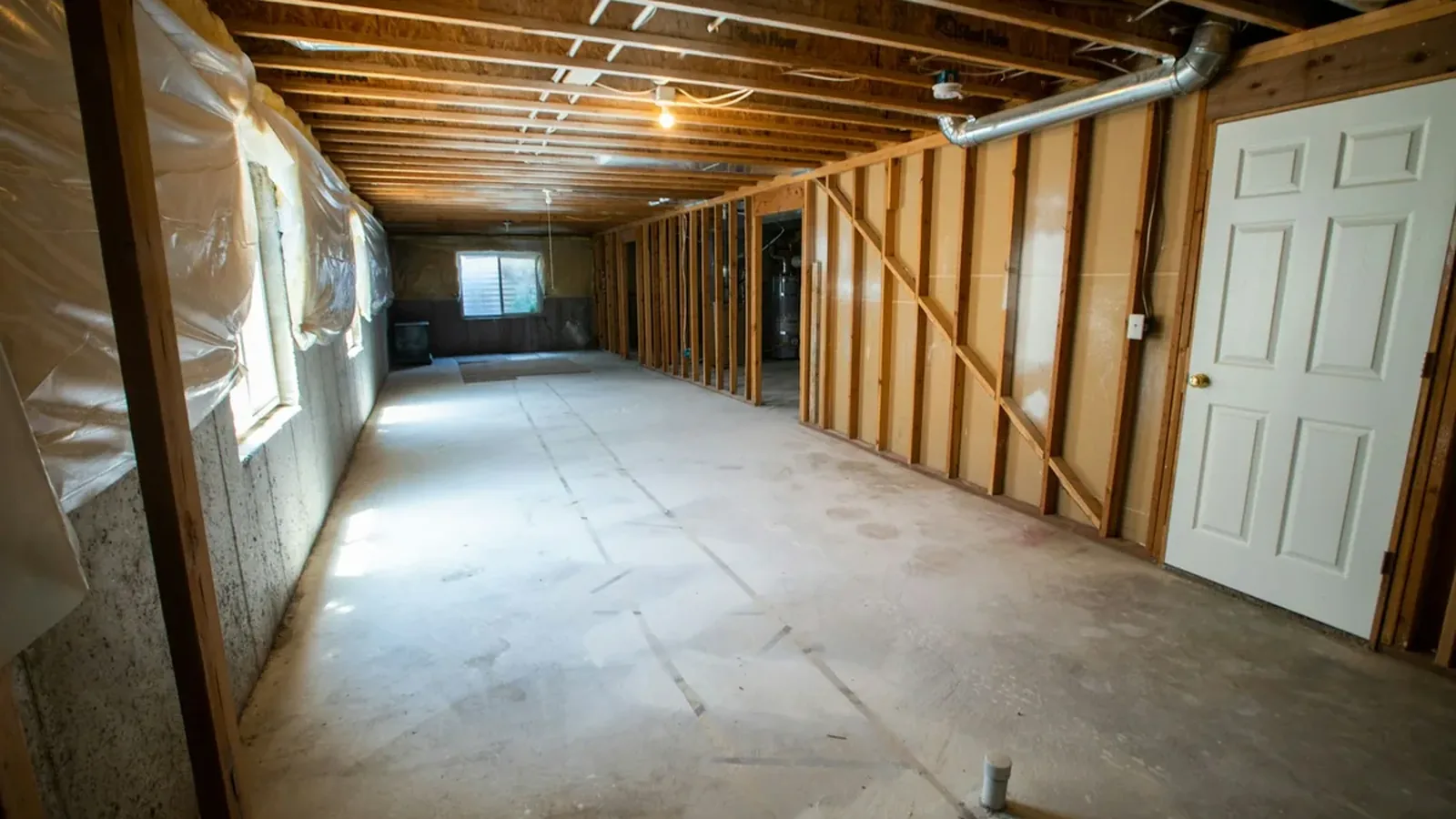
Belleville basements were built in different centuries, and they flood for different reasons. Our crew handles basement flood cleanup in Belleville, IL in limestone and brick cellars as well as modern finished lower levels: pumping, cleaning, drying and repairs. Call now and a crew is dispatched immediately to stop the damage and get the space drying.
Why do Belleville basements with limestone or brick walls seep after every long rain?
Because those walls are porous and were built without drain tile. Once the soil outside is saturated, groundwater passes through mortar joints and the floor-to-wall seam until the ground dries out.
A little dampness on an old wall is part of how these houses were designed. Standing water, water running across the floor, or water rising from the drain is a different matter and needs attention the same day.

Old basement or new basement: what changes
Limestone and brick foundations
Found through downtown, the West End and the older streets off Main. Walls are thick, soft and held with lime mortar. Many have a coal chute, an exterior cellar door and one floor drain. These walls must be dried gradually. Blasting them with heat can make salts migrate to the surface and cause mortar and brick faces to flake. We use steady airflow and dehumidification instead.
Concrete block
Common in mid-century homes. The hollow cores fill with water and release it slowly through the bottom course. Small weep holes are sometimes drilled at the base to drain the cores.
Poured concrete with a sump
Typical of the subdivisions in 62221 and 62226. These are usually finished with drywall and carpet, so the work is about saving finishes. If the pump is the cause, see Sump Pump Failure Cleanup.
Where the water comes from
Seepage through walls and floor during long rains.
Sewer backup through the floor drain during storms. This is contaminated water. See Sewer Backup Cleanup.
Window wells, coal chutes and cellar doors that let surface water in.
Sump pump failure in newer homes.
Broken water lines, water heaters and washing machines.
Foundation cracks from settling or ground movement.
How we clean up a flooded basement
Remove the water
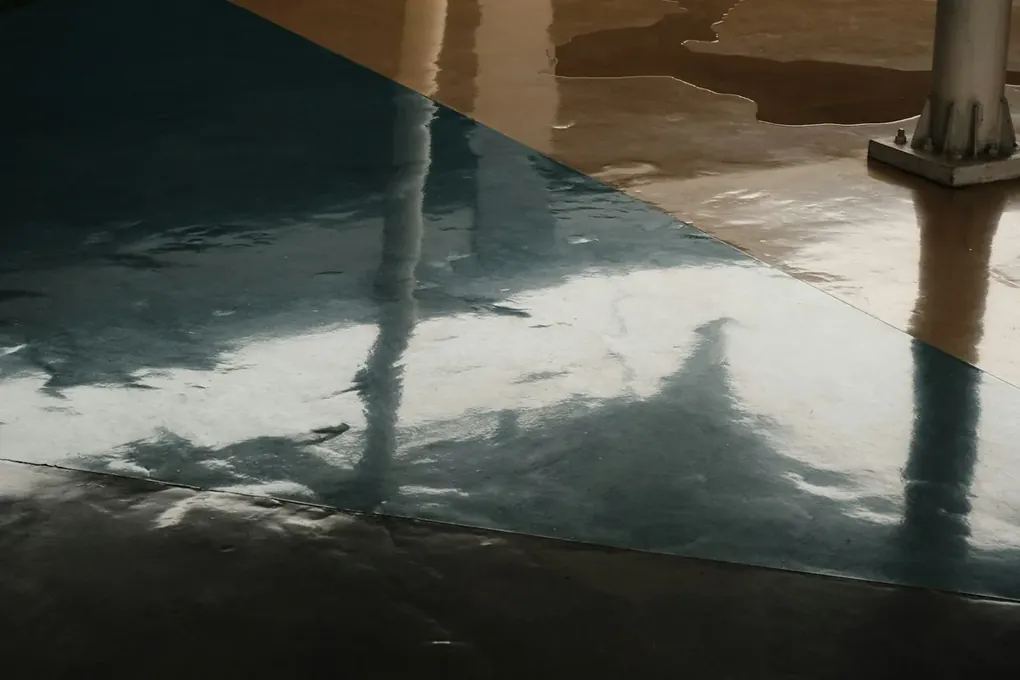
Pumps and extractors take out standing water. More detail is on our Emergency Water Removal page.
Clear out what is ruined
Soaked cardboard, carpet pad, paneling, drywall and insulation are bagged and hauled out. In unfinished cellars this is mostly stored belongings and shelving.
Wash and disinfect
Floors and lower walls are scrubbed. After any drain backup, all touched surfaces are disinfected.
Dry the structure
Dehumidifiers and air movers run for several days. In old cellars the floor joists and subfloor overhead are measured too, because damp air rises into them. Crawl spaces attached to the basement are handled as described on our Crawl Space Water Removal page.
Repair
Finished spaces get new insulation, drywall, trim and flooring once readings are dry.

What we look at that others skip
The furnace and water heater. If burners or controls were under water, they need service before use.
The main beam and posts. Wood posts sitting on a wet floor wick water upward.
The underside of the first floor. Hardwood above a flooded cellar can cup days later.
The floor drain. If it is slow or holding water, the lateral may be blocked and the next storm will repeat the problem.
How long it takes
Water is usually out on the first visit. Drying a poured-wall basement takes three to five days. Brick and stone take longer, commonly five to seven days, because the walls themselves are saturated. Flooded basement cleanup in Belleville, IL is complete only when moisture readings confirm it, not when surfaces look dry.
Cost factors
Size of the basement, depth of water, clean or contaminated water, finished or unfinished, and how much has to be hauled out. Unfinished cellars with clean water are at the lower end, generally hundreds to low thousands of dollars. Finished basements and sewage losses range from several thousand upward. A written scope is provided before the main work begins.
Basement flooding questions
Is water in basement after rain an emergency?
A damp wall is not. Standing water, flowing water or water from the drain is. If you are unsure, call and describe it.
Can you dry a stone foundation completely?
The basement can be brought back to its normal condition. Old masonry in contact with soil always holds some moisture, which is why ongoing ventilation or a dehumidifier helps.
Will my belongings be saved?
Non-porous items can be cleaned. Porous items soaked by sewage or floodwater are usually discarded for health reasons.
Do you handle wet basement cleanup in rentals?
Yes, for landlords and tenants alike.
Is basement water extraction enough without drying equipment?
No. Extraction removes liquid water. The moisture left in walls, framing and concrete has to be dried out with equipment or mold follows.
Water in your basement?
Call (618) 330-9060 for basement flood cleanup in Belleville, IL. The crew is dispatched immediately for flooded basement cleanup in Belleville, IL and basement water removal in Belleville, IL. We also handle basement water removal in Belleville, IL for cellars and crawl spaces.